
Emotional granularity, as defined by Lisa Feldman Barrett, is the ability to identify, label, and distinguish between specific emotional states with high precision, rather than using broad, general terms like “bad” or “good”. It involves nuanced, granular recognition (e.g., “shame” or “lonely” instead of just “sad”) which aids in better emotion regulation, reduced anxiety, and improved mental health.
As I’ve been reading Barrett’s book, How Emotions Are Made, I see a direct parallel to how I create and reflect on artwork.
Creating the Image
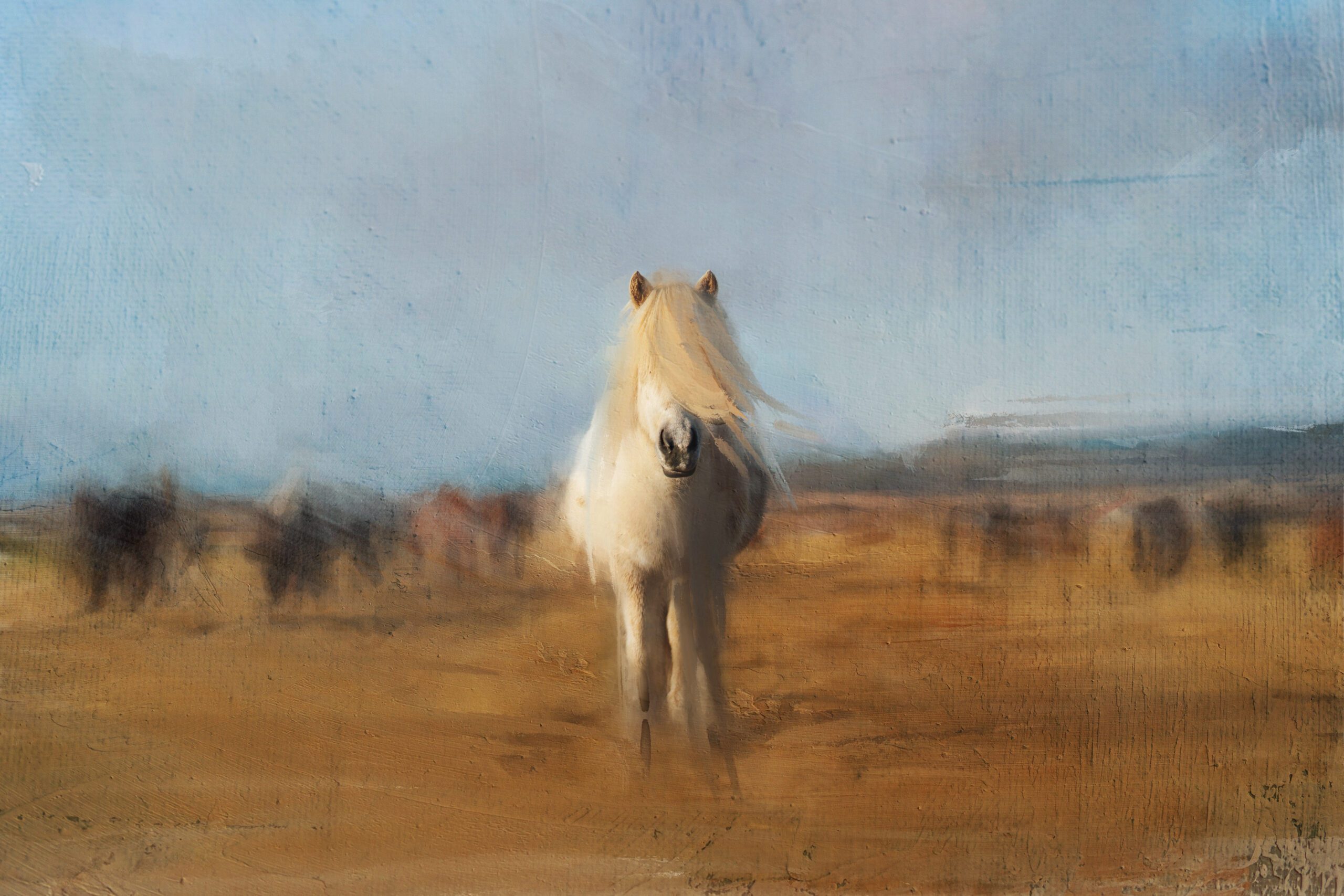
Starting with a general desire to create, I began scrolling through my images. This one caught my attention, my starting place based on an intuitive pull.

Starting with what I feel especially drawn to in any given moment exemplifies Barrett’s emphasis on how emotion begins as core affect, a raw bodily feeling, before it’s made into a specific emotion via internalized concepts.
I work across different apps, experimenting, testing ideas, adding and stripping away elements until the image matches how my own predictive, concept-using brain makes sense of an emotional experience.
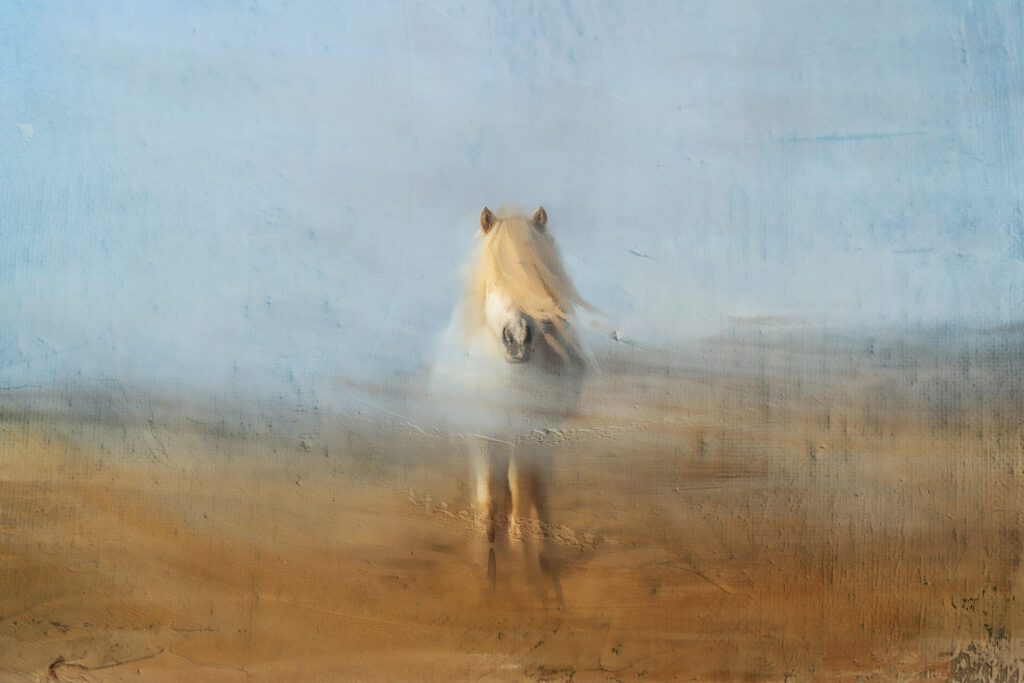
For this piece, I was torn between two versions. I couldn’t decide which I preferred.

Reflecting on the Images
Reflecting on images, for me, involves considering the different layers individually, how they interact, and what that could mean to me. Parsing this out more, I can look at both visual elements and concept elements.
Visual Elements: Color, light, composition, texture, form, line, shape, space, and value.
Concept Elements: Context of the original images, nature of Icelandic horses, specifically in relation to one another; noticing context that comes to mind or feels salient as it crosses my path (words, phrases, songs …); and what is immediately happening in my life.
After some time writing out my thoughts on these different elements, I like the one with more background context. But really, I like the transition between the two, from lack of clarity to more clarity. The transition feels like being more settled after a windstorm. One example to highlight individual elements and how they are considered together is how the blues feel more calming to me in one and colder in the other, likely because the texture feels like wind, along with the sense of emotional ‘coldness’ when you feel lonely or not fully seen, as the horse in one is obscured.
Through Barrett’s Lens
When you repeatedly attend to fine visual differences (value, temperature, edge, gesture, spatial relationships) and name them for yourself—“this blue is calming, that one feels colder,” “this pose reads ‘not fully seen’, that one reads ‘in community’”—you’re effectively building a more granular “visual-emotional vocabulary” parallel to a word vocabulary.
When you sit with a piece and carefully parse, “What exactly am I feeling here? Which elements (light, posture, negative space, color) are carrying that feeling?”, you’re practicing staying with complexity and expanding beyond “like/don’t like” or “this is too much.” You are also practicing mental flexibility in considering possibilities rather than trying to attach facts. Doing that over and over, across many works, trains your nervous system to tolerate and organize subtle, mixed emotions, because you have concrete handles for them in the image.
Every time you use a more nuanced concept, you are reshaping your brain’s predictive model. The value here is not just the individual insight gained from one image, but rather the repetition with variation and how that shapes the richness of your neural network, leading to greater emotional resilience in real life.